
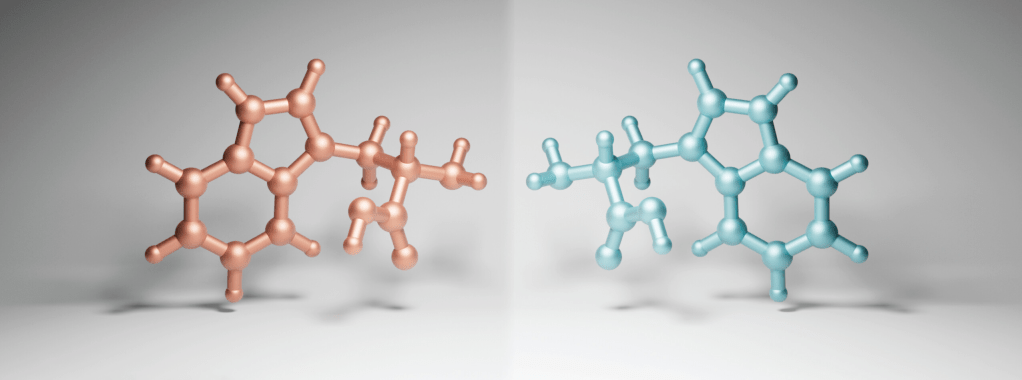
Many key molecules in our cells are specific enantiomers, and their mirror image forms are not found in living beings. For instance, the sugars in DNA are all left-handed, while amino acids are right-handed. For decades, scientists have wondered whether a completely “flipped” mirror organism would be viable and how it would function. With major technological advances in recent years, synthetic biologists are closer than ever to being able to answer these questions. But should we really make mirror organisms? We joined a large group of scientists to synthesize what we already know, and what we can predict based on this knowledge. In a long technical report and a Policy Forum article, we suggest that the risks of ecological disasters from accidental or malicious spread of mirror organisms are very high. These risks arise because although mirror cells may have slow growth due to nutrient limitation, they are likely to escape most predators and parasites, which use chirality to recognize prey or hosts. So, they could maintain a net positive growth rate in the environment, including in the bodies of animal or plant hosts. While specific mirror molecules could have important applications, reaping these benefits does not require mirror cells. Hence, we urge the global community (including but not limited to scientists) to carefully consider the issue before it is too late. Illustration (L- and R- tryptophan): N. Burgess/Science
 AdaptationLab